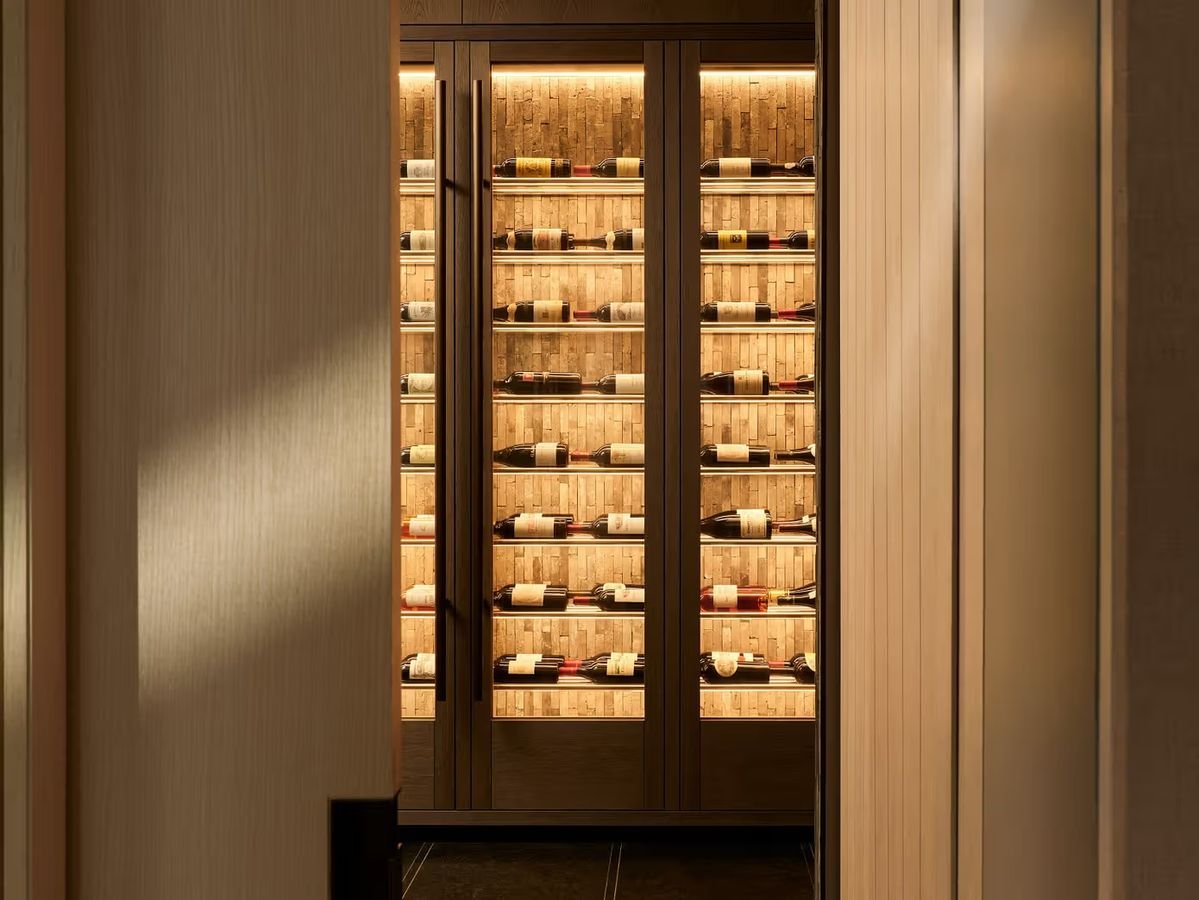
Wine Displays Are Becoming a Feature in Hotel Restaurants
Wine storage has traditionally been a practical consideration for hotel restaurants, designed around temperature control, stock management and ease of access for service teams. Increasingly, however, dedicated wine displays are becoming part of the visual identity of restaurants and bars, bringing together hospitality, craftsmanship and specialist storage.
From compact temperature controlled cabinets to glass enclosed wine rooms, hotels have several options for incorporating wine collections into their interiors. The right approach depends on the scale of the restaurant, the size of its collection and the role wine plays within its food and beverage offering.
In larger hotel restaurants, a dedicated wine room can create a distinctive focal point. Glass partitions allow guests to view the collection while keeping bottles within a controlled environment. When carefully integrated into the architecture, the display can become part of the restaurant’s overall character without interrupting service or circulation.
Smaller properties can achieve a similar effect through freestanding cabinets, bespoke shelving or temperature controlled storage built into a bar. These solutions can make efficient use of limited space while keeping selected bottles accessible to staff. The design needs to balance visibility with practical requirements, ensuring that storage does not become an obstacle in busy service areas.
Temperature and humidity are central to successful wine storage. Different wines have different storage and serving requirements, and exposure to unsuitable conditions can affect quality over time. Specialist equipment, appropriate insulation and protection from direct sunlight are therefore important considerations when planning a display.
Lighting requires particular care. While illumination can help showcase a collection, excessive heat and direct light should be avoided. Integrated LED lighting can provide visibility with limited heat output, allowing bottles and shelving to remain a feature without compromising storage conditions.
Materials also influence the overall effect. Timber shelving can introduce warmth, while metal frameworks and glass create a more contemporary appearance. Stone and darker finishes may suit intimate dining rooms, whereas lighter materials can help a display feel less imposing in smaller spaces.
For hotel operators, a well planned wine display can also support the restaurant’s service. Organised storage helps staff locate bottles efficiently, while a visible collection can encourage conversations between guests and knowledgeable team members. Where appropriate, digital inventory systems can assist with stock control and reduce the administrative demands of managing a large selection.
The concept is not limited to fine dining. Wine displays can work in hotel lounges, private dining rooms and members’ spaces, adapting to the style of each venue. Some properties may choose to showcase regional producers, while others might focus on specialist vintages or collections selected to complement their menus.
As hotels continue to develop distinctive food and beverage offerings, wine storage presents an opportunity to combine practical requirements with considered interior design. With the right balance of technology, materials and presentation, a wine display can serve the needs of the restaurant while contributing to the atmosphere of the space.
Discover products and specialist solutions for hotel restaurants and bars with Hotel Design suppliers.