In Conversation With Hannah Coull… Senior Marketing Specialist At Life Fitness
1. How have hotel guest’s expectations of fitness facilities changed, and what
are hoteliers looking for when investing in their gym spaces?
Guest expectations have moved well beyond the traditional hotel gym. Today’s travellers
increasingly see movement, wellbeing and longevity as part of the overall experience, and expect
the fitness offering to reflect the same level of thought and quality as the bedrooms, restaurants
and spa.
For hoteliers, that means thinking beyond simply adding more equipment. The strongest spaces
combine carefully selected strength, cardio and functional training solutions with intelligent
zoning, intuitive flow and materials and finishes that complement the wider property. The
objective is to create an environment that supports how people actually want to move while
strengthening the hotels overall guest experience.
2. How can hotel fitness facilities encourage guests to maintain their workout
routines while travelling, whether for business or leisure?
The key is removing friction. Guests arrive with different intentions: one person may want a full
strength session, another a quick workout between meetings, while someone else may simply
want to stretch and decompress after travelling. A great hotel fitness facility makes each of those
options feel easy and intuitive.
That means providing versatility across strength, functional training, cardio and recovery, while
creating a space that guests can navigate confidently. The purpose is to give guests the freedom
to pursue movement on their own terms, making fitness feel like a natural and enjoyable part of
their stay rather than something they have to compromise on while away from home.
3. How can hoteliers make the most of limited gym space while ensuring their
fitness facilities cater to guests of all abilities and fitness levels?
It starts with being deliberate about every square metre. More equipment doesn’t necessarily
create a better experience. Selecting versatile solutions, such as dual adjustable pulleys,
combining them with considered strength and cardio choices, and preserving open functional
space can help one environment support a much wider variety of training styles.
Zoning and flow are equally important. Creating clear areas for strength, cardio, functional
movement and recovery helps maximise usability without making the room feel overcrowded.
The principle is that equipment, layout and environment should work together. When they do,
even a more compact footprint can feel considered, intuitive and aligned with the quality guests
expect from the wider property.
4. How can hotel gyms be designed to feel like a natural part of the property,
rather than a separate amenity?
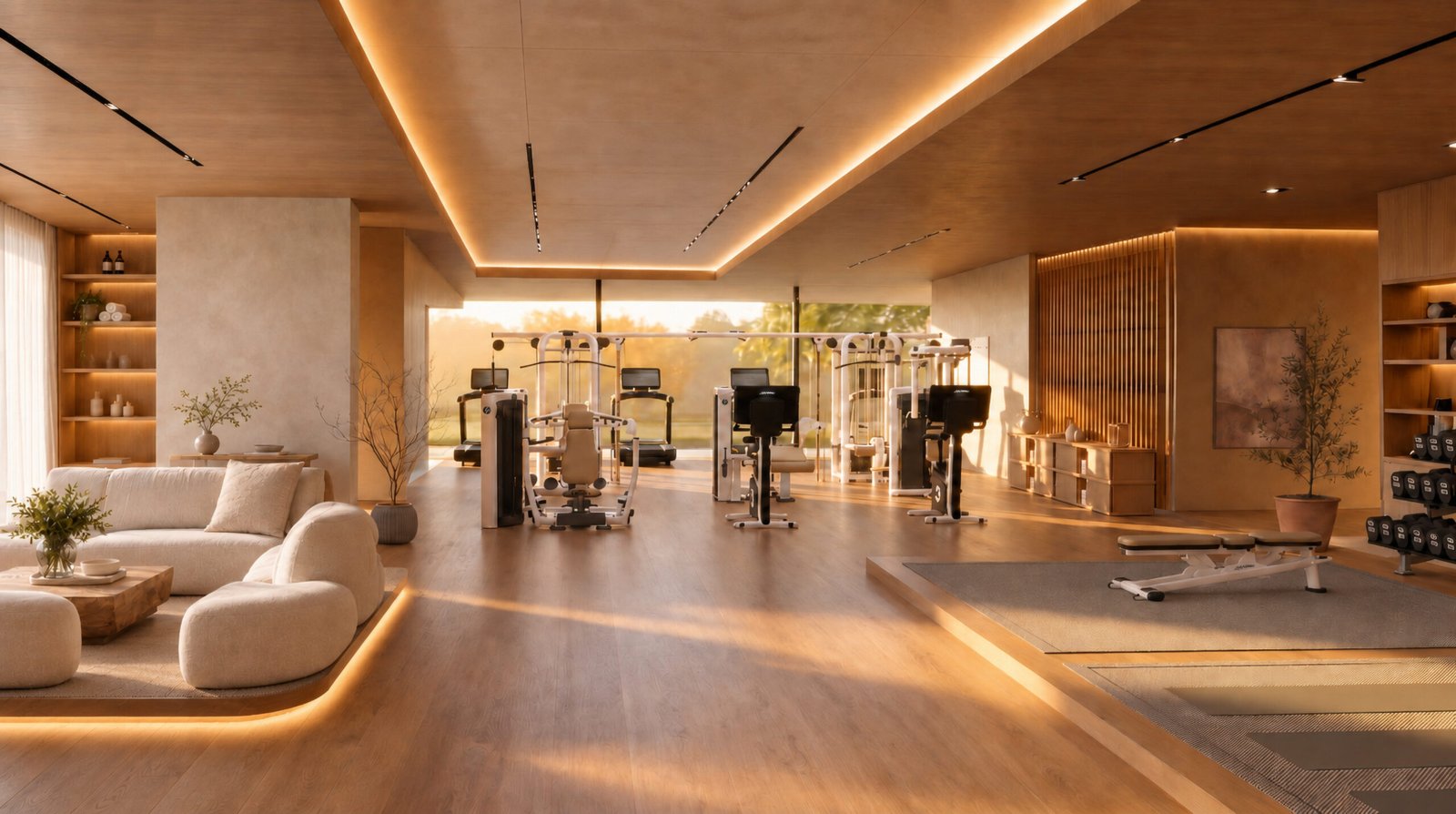
This is one of the central themes of Movement in Harmony, our new lookbook showing how
luxury hospitality brands are turning fitness into a defining part of the guest experience. A hotel’s philosophy is communicated through its architecture, service, atmosphere and design, and we believe its approach to fitness and wellness should tell that same story.
That requires looking beyond equipment and considering materials, lighting, texture, scale, spatial flow and the relationship between the fitness space and the wider wellness experience. Rather than creating a generic gym that could belong to any hotel, these elements can be used to extend the property’s individual character into the fitness environment.
Done well, the gym stops feeling like an add-on and becomes another expression of the property’s identity, creating a more cohesive journey from bedroom to restaurant, spa to fitness space. That’s ultimately what we mean by Movement in Harmony: bringing brand, environment, equipment and the way people move together as one experience.
Download your FREE copy of Movement in Harmony Here.