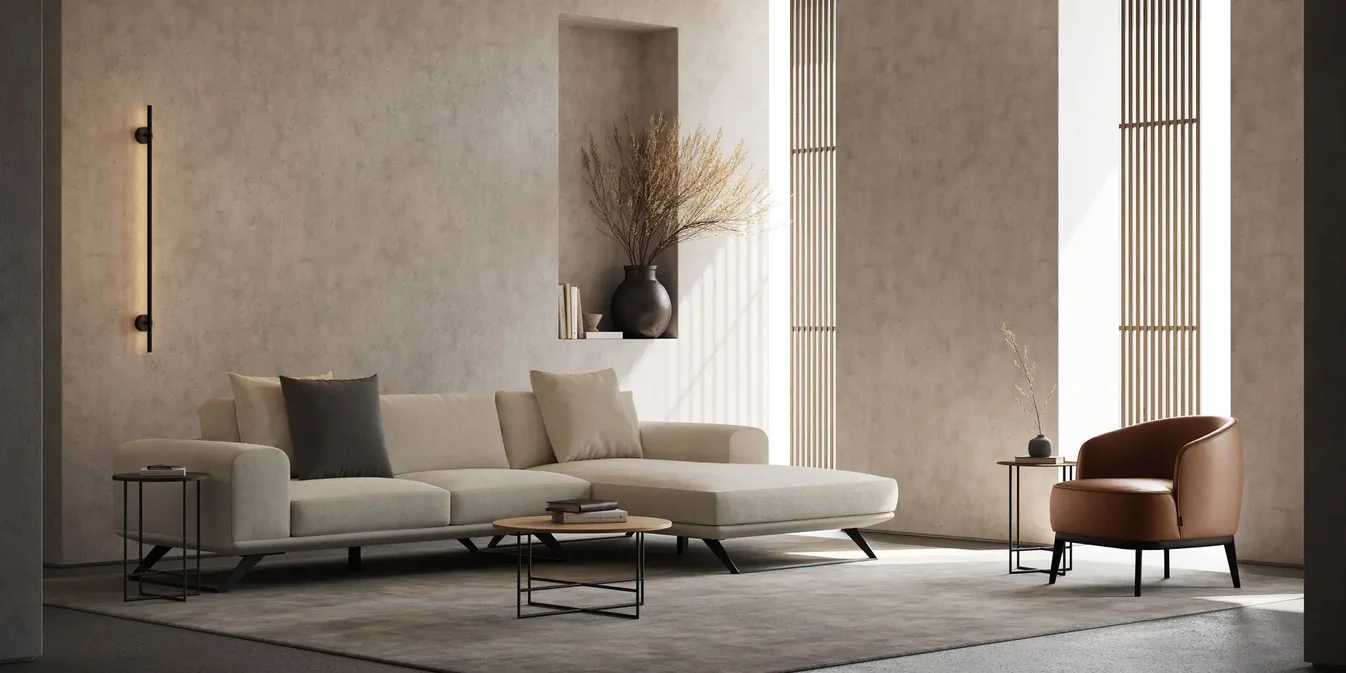
Minimalism in hotels is evolving. In 2025, the movement is less about stark white spaces and rigid geometry and more about texture, materiality, and sensory depth. Tactile minimalism prioritises warmth and human connection over visual austerity, creating spaces that feel both refined and approachable. This shift reflects a wider guest expectation: hotels must now be restorative, comfortable, and subtly luxurious without appearing overdesigned.
Natural Materials and Textured Surfaces
Designers are embracing natural materials to achieve this effect. Wood, clay, linen, and stone feature prominently, often in their raw or lightly finished states. Surfaces are textured rather than glossy, encouraging touch and interaction. Walls may combine plaster with exposed timber or subtle fabric panels, creating a layered, comforting atmosphere that contrasts with the hard minimalism of previous decades. Flooring follows the same principle, mixing untreated timber, terrazzo, or matte concrete to add depth underfoot.
Lighting for Sensory Depth
Lighting plays a critical role in tactile minimalism. Rather than dramatic fixtures, designers are opting for diffuse, ambient light that enhances textures and creates a sense of intimacy. Daylight is maximised through careful window placement and material selection, while low-level lamps and indirect cove lighting help define zones without breaking the serene aesthetic. The goal is a calm, organic rhythm that supports relaxation and intuitive navigation through spaces.
Furniture and Soft Furnishings
Furniture and soft furnishings reflect a restrained, functional approach, but with attention to tactility. Upholstery in natural fibres, matte metals, and solid wood pieces are preferred over shiny or overly polished finishes. Designers are exploring asymmetry and subtle imperfections as a counterpoint to precision, giving interiors a handcrafted quality that feels authentic. Every element is chosen for its sensory contribution rather than decorative statement.
Spatial Layout and Intuitive Design
Tactile minimalism also extends to spatial layout. Rooms and communal areas are arranged to encourage comfort and contemplation rather than to maximise capacity or visual spectacle. Circulation is intuitive, and furniture placement invites pause and social interaction without cluttering the space. Smaller, well-considered details, such as recessed shelving, built-in storage, and hidden technology, support function without disrupting the calm aesthetic.
Boutique Hotels and Sustainability
The trend is particularly visible in boutique and lifestyle hotels, where guests increasingly seek environments that feel personal and immersive. It aligns with sustainability initiatives as well. Longer-lasting materials, reduced reliance on synthetic finishes, and a focus on quality craftsmanship reduce waste while reinforcing the sensory experience. Hotels embracing tactile minimalism can create distinctive, lasting impressions without resorting to fleeting trends.
The Future: Holistic Hospitality Design
Looking ahead, tactile minimalism is likely to merge with other emerging movements such as biophilic design and wellness-led interiors. Designers are experimenting with soft natural sounds, subtle scents, and air quality strategies to complement the visual and tactile experience. The result is a holistic approach to hospitality design where every sense is engaged and the environment feels inherently human.